


Cheapest 🔔 Wedze FR 500, Ski And Snowboard Jacket, 👩 Women’s Jackets 👍
Original price was: $150.00.$93.99Current price is: $93.99.
- No-Questions-Asked Returns
- Expertly Sourced, Quality Guaranteed
- Your needs, our top priority.
- Fast reliable delivery options

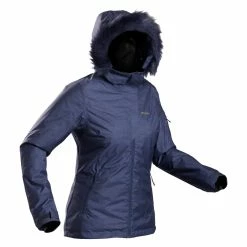
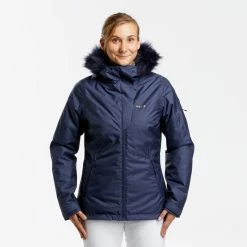
Made for off-piste skiing, this waterproof and breathable jacket made of a 3-layer membrane will keep you comfortable in all weather conditions with its heat pads and vents.
Our women designers developed this jacket for regular women freeriders. Its heat pads keep you warm for riding in any temperature.
Warmth and breathability technology
Placed heat pads to provide good thermal protection during your freeriding outings.
This technology reserves a large area where the 3-layer membrane component can eliminate your perspiration more effectively.
A perfect compromise between a fully padded jacket and a 3-layer jacket without providing any additional heat.
Warmth and modular features to accompany you on your freeride outings throughout the season.
Additional features
Hood over helmet designed to offer maximum protection ensuring freedom of movement.
Adjustable to fit 3 sizes in a single movement, using a single tightening toggle located behind the head.
Tightening on the wrist and cuffs with thumb loop to prevent air and snow from getting in.
Snow skirt that also reduces drafts and prevents snow from getting inside.
Ventilation
To stay dry, it is important to wear a waterproof jacket. But you shouldn’t end up wet with perspiration.
The vents play an important role in wicking away perspiration.
This is why we have equipped this jacket with 2 ventilation zippers and 2 large zippers under the arms (30 cm in size M).
Cut
The wide fit, pre-shaped sleeves are there to free movement and enable you to ride in complete freedom.
We designed this jacket with 1 component that has mechanical stretch properties. You are still free to move around for your favorite rides and tricks!
…while remaining stylish!
Pockets
2 hand pockets with a waterproof zipper.
1 inside chest pocket with watertight zipper.
1 outer chest pocket with watertight zipper.
1 pocket with a zipper and flap on the left sleeve for the ski pass.
1 quick access inner mesh pocket.
What should you wear under your ski jacket?
To keep warm and dry, use the 3-breathable-layers rule: 1 ski base layer, 1 layer 2 jacket to retain warmth, 1 layer 3 ski jacket to protect you from the elements.
C1: It keeps you dry by wicking away the perspiration from the skin to the other layers.
C2: It provides warmth; this is the case for down jackets or fleece pullovers.
The 3rd layer
Protection from the outdoor elements (snow, rain, and wind) by preventing them from entering (while still allowing perspiration to escape so that you do not feel “wet inside”). It should therefore ideally be waterproof AND breathable. The 3rd layer can also provide insulation in the case of lined pants or jackets. This complements the properties of the 2nd layer.
Water-repellency
The water-repellent property of a fabric is its ability to make water run off its surface without absorbing it. This prevents the fabric from becoming waterlogged and remains light, breathable, and warm.
A fabric is made water-repellent by applying a treatment to its outer surface.
This treatment needs to be renewed during the lifetime of the garment (we recommend every 3 washes). All Wedze jackets have received a water-repellent treatment.
Component’s waterproof properties.
The resistance of a fabric is measured by the height of a water column in mm that can be supported by the fabric (test based on the ISO 811 standard). The higher the pressure, the more waterproof the fabric. For example, a fabric with a waterproof rating of 10,000 mm is therefore resistant to the pressure exerted by a 10,000 mm column of water
Breathability of a component.
To find out whether a fabric is breathable, we test its evaporative resistance or RET (based on the ISO 11092 standard). The lower the fabric’s resistance, the more water vapor generated by physical activity can escape, and the higher the fabric’s breathability. For example: RET < 9 = extremely breathable fabric / 9 < RET < 12 = very breathable fabric / 12 < RET < 20 = breathable fabric / RET > 20 = little or no breathability.
What is a membrane or coated component?
The coating is akin to a paint applied inside the fabric that makes the component waterproof while remaining breathable. It is often less expensive than a membrane and requires a liner to protect it. The membrane is a kind of very thin plastic film (polyurethane) that makes the component waterproof while remaining breathable. It has the advantage of being more flexible, lighter, more durable, and often more breathable than a coating.
How do we make a garment waterproof?
The waterproof properties of the garment are related to its fabric, seam sealing, and assembly design.
We then carry out shower tests on our garments.
Waterproofness/Shower test
This garment has been validated in a shower test under 100 L of water / m² / hour for 3 hours.
This test reproduces the conditions of a heavy mountain storm.
How do we make a garment breathable?
In addition to the breathability of the fabrics used, we employ technical solutions (zippers, vents, mesh) to improve the overall ventilation of our jackets and pants designed for Freeride skiing. These ventilation systems regulate the temperature inside the garment while also helping to eliminate the perspiration generated by the body during physical activity.
Determining the environmental impact of our products
The product’s environmental impact is calculated over its entire lifespan, using various indicators. An overall score from A to E is given to help you easily identify the most eco-friendly products by comparing products of the same type (T-shirts, pants, backpacks etc.). Decathlon is committed to displaying the environmental information of its products.
For more information: http://sustainability.decathlon.com/
What is the RECCO® system?
All our Freeride and All-Mountain jackets and pants are equipped with the RECCO® system.
With RECCO® technology, you can be located in the event of an avalanche. Someone who is equipped with RECCO® reflectors and is buried in the snow can be quickly and accurately located by the emergency services using the RECCO® tracker. RECCO® reflectors are not a substitute for an AVD. The RECCO® technology works as a complementary measure, increasing the chances of being found in time.
Tutorial on how to wash your waterproof garment
We recommend that you follow these guidelines at every wash in order to retain all the technical features of your garment.
Link: https://youtu.be/rh4GLwALgBM
After 3 washes, restore the water-repellent properties with a waterproof spray or wash-in product.
Composition
Main fabric : 100.0% Polyester cationic
Padding : 100.0% Polyester cationic
Main lining : 100.0% Polyester cationic
Secondary lining : 100.0% Polyamide
Coating : 100.0% Polyurethane
Cuff : 85.0% Polyamide, Cuff : 15.0% Spandex
Waterproof : 15,000 mm rated membrane, fully taped seams & waterproof zipper to keep you dry.
Breathability : The membrane, placed heat pads, and ventilation help wick away perspiration
Freedom of movement : Loose fit and stretch fabric that follow all your movements
Warmth : The glued heat pads (100g/m² insl) protect you where it’s needed, without excess
Snow reduction : Hood on helmet, storm cuffs, and a snow skirt to face all conditions
Pockets : 5 secure pkts: 2 hand, 1 chest, 1 inside, 1 ski pass, and 1 mesh pocket
| Color | Dark Sepia |
|---|---|
| Size | S, M, L, XL, 2XL |
Be the first to review “Cheapest 🔔 Wedze FR 500, Ski And Snowboard Jacket, 👩 Women’s Jackets 👍”
Related products
Jackets
Cheapest 🔥 Jackets Btwin UC100, High Visibility And Waterproof City Bike Rain Jacket, 👩 Women’s 🔥


Reviews
There are no reviews yet.